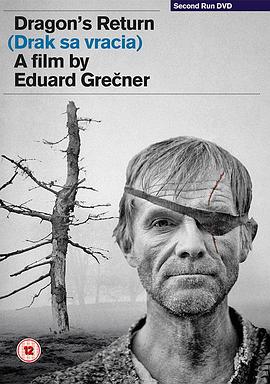
与Stefan Uher和Elo Havatta一样,Eduard Grecner也是60年代斯洛伐克新浪潮电影的缔造者之一。他的三部影片《一周七天》(1964)《尼绒月亮》(1965)和这部《徳拉克的回归》都是斯洛伐克新浪潮电影的代表作。这部叙事方法独特带有明显意识流风格的黑白影片甚至间接影响到了后来法国导演格里耶在捷克拍摄的两部影片《说谎的人》和《Eden and After》。 A special place in the development of feature films is reserved for Eduard Grecner, the creator of just one good film, Dragon Returns (Drak sa vracia, 1967), titled after the nickname of the lead character. After his initial work with Uher, Grecner made his mark as a proponent of the so-called intellectual film, the antithesis of the sociologically, or rather, socially critical film. Grecner's great role model was Alan Resnais, a young French filmmaker who sought to introduce Slovakia to the idea of film as a labyrinth in which meanings are created not by stories, but by complex configurations of dialogue, shots, and various layers of time, thus differentiating film from both literature and theater. In Dragon Returns―the story of a solitary hero who is needed by villagers living far in the mountains, but who is rejected by them at the same time because of his detachment―Grecner brought the tradition of lyricized prose to life through a whole series of formal aesthetic techniques. Alain Robbe-Grillet immediately developed this idea in the film shot in Bratislava The Man Who Lies (Slovak Muz, ktory luze; French title L'homme qui ment; 1968), and perfected it in Eden and After (Eden a potom, 1970).
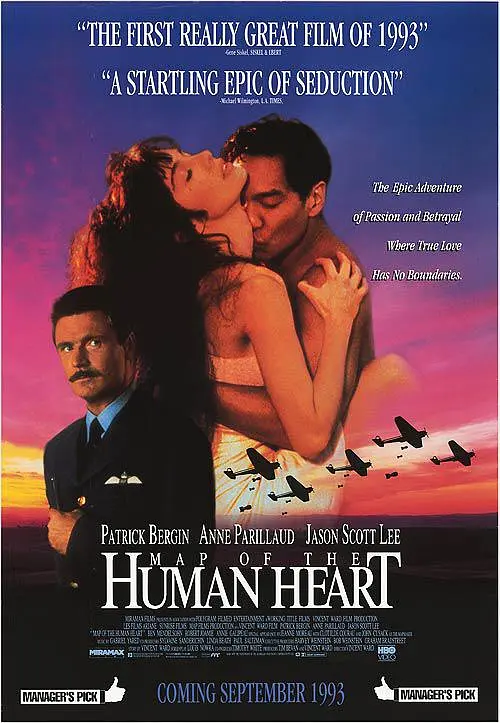
故事开始于1964年,阿维(李戴 饰)自幼便生活在原始雨林中,从来都没有接受过文明的洗礼,也不知道人类社会的存在和其中的规则。一天,阿维偶然邂逅了名为华特(约翰·库萨克 John Cusack 饰)的制图员,华特惊讶于自己的发现,决定将这个孩子带回文明社会。
刚开始,骤变的生活环境让阿维感到十分的不适,没有人愿意和他这样的野孩子做朋友,在学校里,他认识了拥有印第安血统的女孩艾伯丁(安娜·帕里约 Anne Parillaud 饰),后者成为了他第一个朋友。最终,阿维还是选择回到了故乡,成为了一名猎人,一晃眼多年过去,命运让他和艾伯丁重逢了。
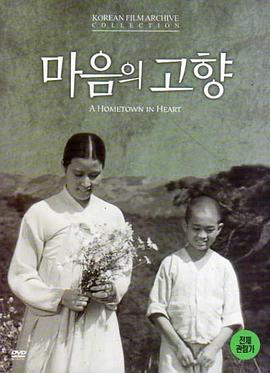
Synopsis Do-seong (Yoo Min) is a child monk who lives at a small mountain temple with the head monk (Byeon Ki-jong), learning the teachings of Buddha. He becomes attached to a young widow (Choi Eun-hee) who comes to pray at the temple, and the childless widow entreats the head monk to let her raise Do-seong as her own son. Conflict ensues when Do-seong's real mother (Kim Seon-young) appears, but she leaves the temple for the sake of her son's future. On the day the widow is to take the child down from the mountain, the head monk discovers that Do-seong has killed a bird by ensnaringit in a trap and decides not to let the boy go into the secular world. When Do-seong finds out that his real mother has been to the temple, he sets out to find her. Notes A film that has garnered recognition for its cinematography and direction by eliminating sentimentality and unaffectedly capturing the quiet life of a mountain temple. A Hometown in Heart demonstrates the camera technique and directorial skill of movies that appeared after the liberation of Korea. A Hometown in Heart, adapted from playwright Ham Se-deok's A Little Monk (Dong-seung), was hailed upon its release as a masterpiece that marked a new pinnacle in Korean moviemaking after the liberation. Eschewing new-school sentimentality to quietly express a boy's longing for maternal love, the film unfolds the everyday lives of three generationsthe head monk, a young monk, and a little child monkagainst the backdrop of a quiet temple in the mountains. The long shots utilized by director of cinematography Han Hyung-mo to capture the beautiful scenery of the mountain temple from a distance received great critical acclaim at the time. Also, each of the film's characters is convincingly portrayed through the skillful direction of Yoon Yong-kyu. In particular, the scene which expresses Do-seong's desperate yearning for a mother's love and his birth mother's past visit to the temple by combining them into a dream sequence reveals deep consideration for articulating story and emotion via a compressed visual grammar without tending toward sentimentalism. The movie's final scene, in which Do-seong awakens from his dream and sets off down the path in search of his mother, is both touching and beautiful. The film also features Choi Eun-hee, in the part of the young widow who warmly embraces Do-seong with her love, in one of her first roles. Afterword - Lee Kang-su, writing under the pseudonym of Kwak Il-byeong, first adapted playwright Ham Se-deok's A Little Monk (Dong-seung) into a screenplay, which was then shot for the silver screen with additional embellishments by the director.