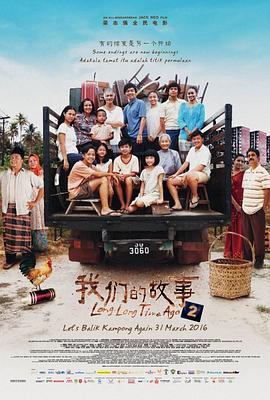
本片以上世纪六十年代的本地家庭为主轴,通过成员的际遇,带出早期的甘榜生活以及后来的组屋生活,剧情横跨数十年。 电影也将体现新加坡如何从一个以方言为主流语言的社会演变成华语到现今英语的过程,从中回顾流失的方言。它也会融入导演的许多亲身经历,并将安插多首怀旧歌曲。 After the 1969 nationwide floods, Zhao Di takes over her father's family farm with the help of reformed gangster Ah Long. As Singapore's economy prospers, the Singaporean mindset is also forced to change with the times. Osman catches his teenage son, Ahmad practicing with his rock band. As a conservative man, Osman believes rock music will have a negative influence on Ahmad. Father and son argue over their different opinions, causing Ahmad to run away. Meanwhile, Ah Hee and Rani decide to get married. But their traditional parents disapprove of their marriage. In 1977, the Government begins expropriating land for redevelopment, forcing villagers from their kampongs. Licensed farmland owners, such as Zhao Di, are financially compensated for their land. Ah Kun, Zhao Di's greedy brother accuses Zhao Di and Ah Long of having an affair to tarnish her name in front of the family. In the midst of Ah Kun's persistent accusations, Zhao Di's health takes a hit. Will Zhao Di be able to keep her hard-earned compensation money What will become of her family if Zhao Di's health continues to deteriorate As people change with time, will the kampong spirit remai
아무 것도 가진 것 없는 스무 살의 요셉 앞에 기적과 같은 노래가 하나 뚝 떨어진다. 운명 같은 '그 노래'를 부르며 행복한 시간을 보내던 어느 날, 요셉의 앞에 모든 것을 다 가진 심지어 그 노래의 주인이기까지 한 청명이 나타나는데...... 가지지 못한 것 만을 갈망하며 작은 행복들을 놓쳐 버리는 우리 모두의 이야기.