A lover's doubt in the cold light of morning leads a chain of uneasy intimacies--counselors, disruptors, peacemakers and fire-starters--every one looking to have a little faith rewarded.
There There is director Andrew Bujalski’s latest collection of vignettes. The film tells a total of six separate stories, but some of the characters appear in multiple shorts. Each miniature sc...
A stark and intimate portrait of a woman against all odds, marginalised by society and trying to find a way to survive in a world where motherhood, misogyny, crime, and independence meet. Faced with societal scorn and her own moral conflict, she navigates a perilous path, determined to shield her child from chaos. In her struggle for survival, bonds of love and loyalty are test...
Take Care is a comedy about a woman (Leslie Bibb), who returns home from the hospital after getting hit by a car, only to realize no one wants to take care of her. After being brushed off by her sister, (Nadia Dajani), best friend, (Marin Ireland) and neighbor, (Michael Stahl-David) she reluctantly asks an ex-boyfriend, (Thomas Sadoski) to help her.(SXSW)
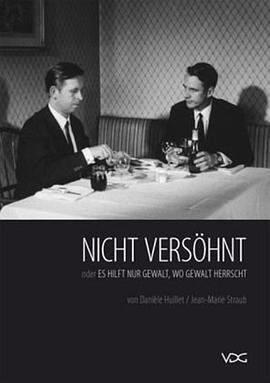
The subtitle of Jean-Marie Straub and Danièle Huillet’s first feature, from 1965, “Only Violence Helps Where Violence Reigns,” suggests the fierce political program evoked by their rigorous aesthetic. The pretext of the film, set in Cologne, is Heinrich Böll’s novel “Billiards at Half Past Nine,” which they strip down to a handful of stark events and film with a confrontational angularity akin to Bartók’s music that adorns the soundtrack. The subtlest of cues accompany the story’s complex flashbacks. The middle-aged Robert Fähmel tells a young hotel bellhop of persecutions under the Third Reich; his elderly father, Heinrich, an architect famed for a local abbey, recalls the militarism of the First World War, when his wife, Johanna, incurred trouble for insulting the Kaiser. A third-generation Fähmel is considering architecture, just as the exiled brother of Robert’s late wife, returns, only to be met by their former torturer, now a West German official taking part in a celebratory parade of war veterans. Straub and Huillet make the layers of history live in the present tense, which they judge severely. The tamped-down acting and the spare, tense visual rhetoric suggest a state of moral crisis as well as the response—as much in style as in substance—that it demands.
After living peacefully in the caverns of a small town, a stranded group of aliens turn deadly as they fight for their existence, betraying the compassionate chief of police who has protected them for 28 years.